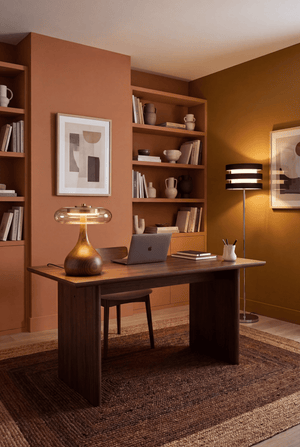
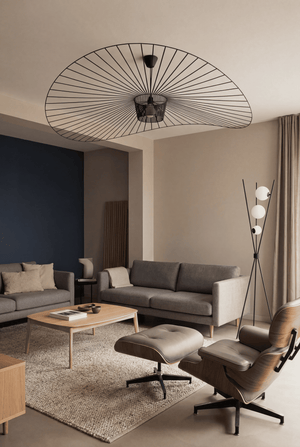

Autumn lighting: 5 ideas to create a warm atmosphere
The arrival of autumn transforms our daily habits. Days get shorter, natural light decreases, and the desire for cocooning intensifies. In this context, autumn lighting becomes a key element in creating welcoming and comforting spaces. Far from being purely functional, your lighting system directly influences the atmosphere of your home and your daily well-being.
Creating a warm indoor atmosphere relies on precise technical choices: color temperature, light output, source positioning, and intensity variation. These parameters, mastered by lighting professionals, can radically transform the perception of your living spaces.
The importance of color temperature in autumn
The warm color temperature is the foundation of successful autumn lighting. Expressed in Kelvin (K), this technical characteristic determines the overall mood of your rooms. For the autumn season, always choose temperatures between 2700K and 3000K, which reproduce the warmth of a fireplace.
This temperature range creates a striking contrast with the coolness outside and promotes the production of melatonin, the hormone of sleep and relaxation. Conversely, cool temperatures above 4000K, suitable for workspaces, would have a counterproductive effect in autumn, increasing the feeling of cold and disrupting biological rhythms.
The CRI (Color Rendering Index) also deserves your attention. A CRI above 80 ensures a faithful rendering of the warm autumn colors—orange, ochre, red—that characterize this season. For exceptional rendering of textiles and natural materials, aim for a CRI above 90.
First idea: multiply the number of spot light sources
The professional approach to cocooning lighting involves abandoning a single central light in favor of a multi-source system. This technique, called "layering" by lighting designers, layers three types of lighting: general, task, and ambient.
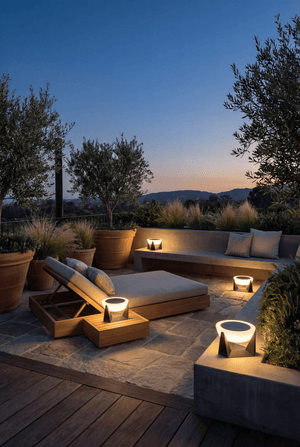
LED garlands and small light sources fall into this latter category. Their low luminous flux, generally between 50 and 150 lumens per meter, creates points of visual warmth without glare. Position these elements at different heights: shelves (1.20 to 1.80 m), window sills (0.90 to 1.10 m), and floor arrangements.
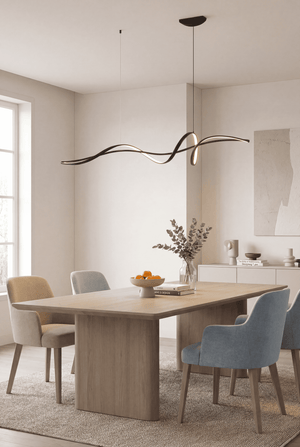
To optimize their effectiveness, maintain a regular spacing of 30 to 50 cm between each light point. This even distribution prevents shadowy areas while preserving the desired intimacy. Designer pendant lights perfectly complement this setup by providing a soft main light source.
Technical optimization of small sources
LED technology offers decisive advantages for this use: exceptional lifespan (25,000 to 50,000 hours), reduced consumption (0.5 to 2W per light point), and stable color temperature over time. Choose dimmable models to adjust intensity throughout the day.
The beam angle directly influences the effect achieved. A narrow angle (30°) focuses the light for an accent effect, while a wide angle (120°) harmoniously diffuses the warm light throughout the surrounding space.
Second idea: play with heights and lighting zones
Creating differentiated lighting zones visually structures your spaces and allows you to adapt the ambiance to different activities. This professional approach distributes light sources across three distinct levels:
Low level (0 to 0.80 m): accent floor lamps, indirect floor lighting, decorative pathway lighting. This level creates a reassuring visual base and naturally guides movement.
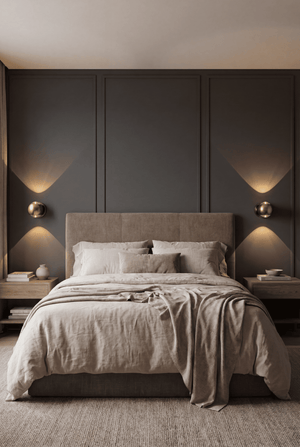
Intermediate level (0.80 to 2 m): table lamps, wall sconces positioned between 1.70 and 1.80 m from the floor. These sources provide functional lighting while contributing to the overall ambiance.
High level (2 m and above): pendants, chandeliers, ceiling lights. Installing pendants requires a minimum distance of 2.10 m between the floor and the lowest point of the fixture in circulation areas.
Power calculation by area
Each area requires lighting suited to its function. For a comfortable autumn living room, follow these reference values:
- Reading area: 250 to 300 lumens per m²
- Conversation area: 100 to 150 lumens per m²
- Ambient lighting: 50 to 100 lumens per m²
- Circulation: 75 to 100 lumens per m²
These values, adapted to the autumn context, prioritize visual comfort and relaxation while maintaining sufficient functionality for daily activities.
Third idea: control intensity variation
The dimmable function revolutionizes the use of your autumn lighting fixtures by allowing precise adjustment of light intensity throughout the day. This technology, now available on most LED sources, transforms a single fixture into a versatile lighting solution.
The technical principle is based on modulating the electrical voltage powering the LED source. Modern dimmers maintain a stable color temperature across the entire dimming range, avoiding the color shifts seen with older halogen technologies.
For optimal autumn use, set three intensity levels:
- 100% in late afternoon: compensating for the decrease in natural light
- 60% in the evening: maintaining activity while starting to relax
- 20% at the end of the evening: preparing for rest, stimulating melatonin production
Technical compatibility of dimmers
Check the compatibility between your LED sources and the type of dimmer installed. LEDs require specific dimmers (leading edge or trailing edge) to avoid flickering and ensure smooth dimming. The minimum power of the dimmer must match the total load of the connected LEDs, generally between 10 and 400W.
Fourth idea: incorporate natural and warm materials
Combining autumn luminous decoration with natural materials enhances the feeling of warmth and authenticity. This design approach leverages the reflective and diffusive properties of each material to modulate the quality of the emitted light.
Wood, the reference material for this season, partially absorbs light while warming its apparent temperature. Light woods (beech, bleached oak) reflect 40 to 60% of the incident light flux, while dark woods (walnut, wenge) reflect only 15 to 25%, creating a more intimate atmosphere.
Travertine and natural stone bring a sophisticated mineral dimension. Their slightly rough surface diffuses light harmoniously, eliminating glare while maintaining sufficient brightness. These materials have the advantage of aging gracefully under LED lighting, unlike synthetic materials.
Optical properties of natural materials
Each material influences the perception of light according to its optical characteristics:
- Opaline glass: even diffusion, reduction of contrasts by 60 to 80%
- Woven natural fibers: warm filtering, creation of shadow play
- Brushed metal: directional reflection, enhanced intensity
- Matte ceramic: gentle diffusion, preserved color temperature
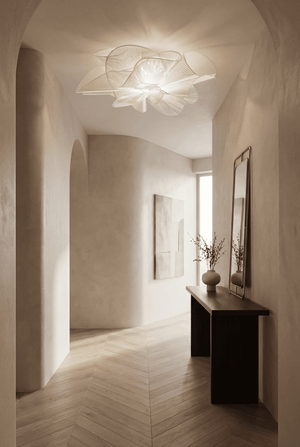
Expertise lies in combining these properties to achieve the desired lighting effect. Ceiling lights made from natural materials excel in this approach, blending technical performance with authentic aesthetics.
Fifth idea: create a focal point with an exceptional light fixture
Every successful autumn lighting arrangement is built around a central element that structures the space and draws the eye. This standout fixture, whether it’s a striking chandelier or a sculptural pendant, sets the tone for the room and influences the perception of the entire lighting scheme.
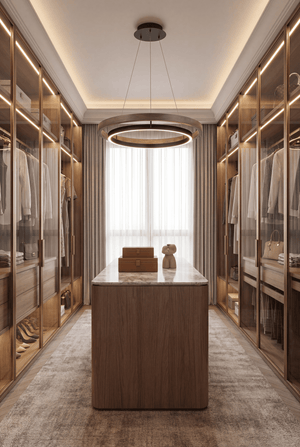
The choice of this centerpiece follows precise proportional rules. For a 20 m² living room, opt for a suspension diameter between 60 and 80 cm. This size ensures a strong visual presence without overloading the space. The installation height must strictly follow the rule of at least 2.10 m from the floor.
The luminous power of this central fixture generally represents 40 to 50% of the room's total output. For a 20 m² living room requiring a total of 2000 to 3000 lumens, your main fixture will therefore deliver 800 to 1500 lumens. This distribution helps maintain the effectiveness of peripheral ambient lighting.
Technical selection criteria
Beyond aesthetics, several technical parameters determine the relevance of a central light fixture:
Light distribution: choose models with 360° diffusion for even lighting, or downward-oriented to highlight living areas.
Electrical compatibility: check the socket type (E27 for high power, E14 for decorative effects) and the supply voltage (standard 230V or low voltage 12V).
Protection rating: a minimum IP20 ensures safety for domestic use, IP44 for adjacent damp areas.
Contemporary designer chandeliers excel in this role as a centerpiece, combining technical performance with exceptional decorative impact.
Energy optimization of your autumn lighting
The transition to high-performance cocooning lighting naturally goes hand in hand with a focus on energy efficiency. Modern LED technologies achieve outputs of 100 to 150 lumens per watt, which is 5 to 10 times higher than traditional halogen solutions.
This remarkable efficiency allows for prolonged use without significant impact on electricity consumption. A living room equipped with 15 LED sources of 5W each consumes only 75W in total, equivalent to a standard halogen bulb, while offering incomparable ambiance richness.
The exceptional lifespan of LEDs (25,000 to 50,000 hours) represents 15 to 25 years of normal domestic use. This longevity eliminates maintenance constraints and ensures stable lighting performance over time.
Automation and intelligent control
Intelligent control systems automatically optimize your lighting according to outdoor conditions and your lifestyle habits. These solutions detect the decrease in natural brightness and gradually activate artificial lighting, maintaining a constant level of comfort.
The scheduling automatically adjusts the color temperature: 3000K at the beginning of the evening to maintain activity, then 2700K and gradually 2200K to promote falling asleep. This imperceptible variation optimizes your natural circadian rhythm.
Maintain the efficiency of your installation
Optimal autumn lighting requires regular maintenance to preserve its performance. Dust accumulated on lampshades and reflectors reduces light output by 10 to 30% depending on environmental conditions.
Clean fixture surfaces monthly with a slightly damp microfiber cloth. For delicate materials (opal glass, natural fibers), use specific non-abrasive products that preserve the optical properties of the materials.
Check the proper functioning of dimmers and the stability of fixtures every six months, especially for pendants and wall sconces affected by temperature variations.
Investing in quality autumn lighting will permanently transform your perception of your home. Beyond the functional aspect, it influences your daily well-being and enhances your entire interior decor. Each light source, expertly chosen and positioned, helps create the warm and comforting atmosphere this special season deserves.
What color temperature should you choose for warm autumn lighting?
To create a warm atmosphere in autumn, choose a color temperature between 2700K and 3000K. This range reproduces the warmth of a fireplace and pleasantly contrasts with the coolness outside. Avoid temperatures above 4000K, which would create a cold atmosphere unsuited to the season.
How many light sources should be planned for a 20 m² living room in autumn?
For a 20 m² living room, plan for 5 to 8 light sources distributed over three levels: a main fixture (pendant or chandelier) of 800 to 1500 lumens, 2 to 3 accent lamps of 200 to 400 lumens each, and 2 to 4 ambient sources of 50 to 150 lumens. This distribution ensures lighting suited to different activities while creating a cozy atmosphere.
What light output should be recommended for a cozy autumn ambiance?
For optimal cozy ambiance, follow these intensities: 50 to 100 lumens per m² for general ambient lighting, 100 to 150 lumens per m² for conversation areas, and 250 to 300 lumens per m² only for reading corners. These values, lower than general lighting standards, prioritize comfort and relaxation characteristic of the season.
How can I optimize the lifespan of my LED fixtures during intensive autumn use?
Quality LEDs offer a lifespan of 25,000 to 50,000 hours, or 15 to 25 years of normal use. To optimize their longevity, avoid frequent switching on and off, clean the fixtures monthly to prevent overheating due to dust buildup, and check LED dimmer compatibility to avoid flickering that can damage electronic components.