
Functional and decorative lighting: complete guide 2024
The time when brightness and appearance were seen as opposites is now behind us. Modern lighting solutions make it possible to perfectly combine technical efficiency with decorative refinement. This integrated approach completely transforms your home experience, creating spaces that are both practical and visually harmonious.
The technical basics of effective lighting
The success of a lighting project depends on mastering precise technical criteria. Optimal practical lighting requires brightness suited to each use: 250 to 300 lumens per square meter for work surfaces, 100 to 150 lm/m² for relaxation areas, and 50 to 100 lm/m² in bedrooms.
Color temperature is a key factor: choose a warm white between 2700K and 3000K for living spaces, a neutral white at 4000K for work areas, and keep cool white (5000K to 6500K) for technical spaces. The color rendering index (CRI) should be at least 80 for acceptable quality, ideally 90 or higher for the best color accuracy.
Beam angles determine how light is spread: 30 degrees for accent lighting, 60 degrees for general lighting, and 120 degrees to create a soft, diffused atmosphere. Understanding these technical aspects helps you choose solutions that are both effective and attractive.
Selection strategies for stylish and effective light fixtures
Choosing stylish practical light fixtures requires a methodical approach. First, consider architectural constraints: ceiling height, pathways, existing furniture. A pendant light should hang at least 2.1 meters from the floor, while a wall light is ideally installed between 1.7 and 1.8 meters high.
Premium materials such as brushed metal, opal glass, or gold finishes add a decorative touch without sacrificing performance. Modern LED technology offers an exceptional lifespan of 25,000 to 50,000 hours, making it worthwhile to invest in pieces with refined design and long-term value.
Dimmable solutions with built-in dimmers are the perfect blend of function and decoration. They let you adjust brightness as needed while keeping the fixture’s appearance. This technical flexibility enhances the decorative effect by creating different moods in the same space.
Quality criteria for a well-informed choice
Checking standard sockets (E27, E14, GU10, G9, B22) ensures compatibility with your existing setup. Premium fixtures often use non-replaceable LED sources but make up for it with their outstanding lifespan and superior energy efficiency.
Wattage should match the intended use: choose high-power solutions for work areas, and moderate power for relaxation spaces. This technical approach ensures optimal visual comfort while maintaining aesthetic harmony.
Lighting design: creating balanced arrangements
The art of atmosphere and performance lighting is based on layering light sources. This technique involves combining three levels of lighting: general, practical, and decorative. Each level meets specific needs while contributing to the overall mood.
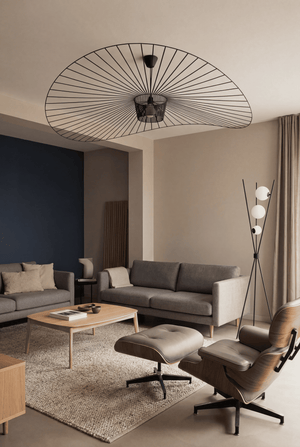
General lighting, provided by ceiling lights or pendant lights, sets the basic brightness of the room. Designer floor lamps add to this function while bringing a striking sculptural presence. Their strategic placement creates visual anchor points that structure the space.
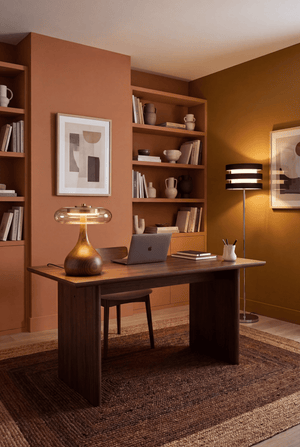
Practical lighting, delivered by table lamps or targeted wall lights, meets specific needs: reading, working, cooking. These technical solutions become decorative when they feature refined shapes and fine materials.
Harmonizing styles and finishes
Aesthetic consistency comes from harmonizing finishes and materials. Combine fixtures that share visual traits: the same family of materials, complementary finishes, or matching geometric shapes. This approach creates a recognizable lighting signature that unifies the overall decor.
Fine metals and textured glass add a tactile richness that goes beyond mere lighting. These premium materials turn each fixture into a decorative object in its own right, able to enhance the space even when switched off.
Specific solutions for each type of space
Every home environment presents its own challenges for practical and decorative lighting. The living room calls for a flexible approach with several sources of varying brightness: soft mood lighting for relaxation, focused lighting for reading, and decorative lighting to highlight architectural features.
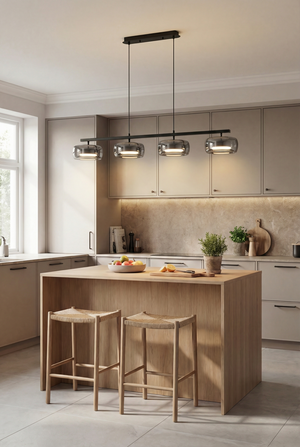
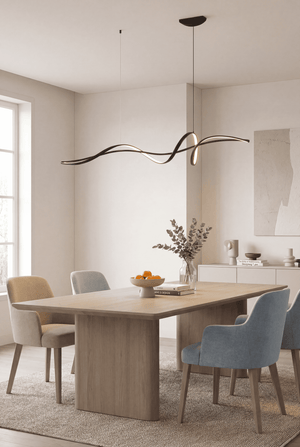
The kitchen requires high-performance technical lighting without sacrificing appearance. Choose even general lighting, complemented by focused lighting for work surfaces. Pendant lights above the central island combine function and decorative impact, creating an architectural focal point.
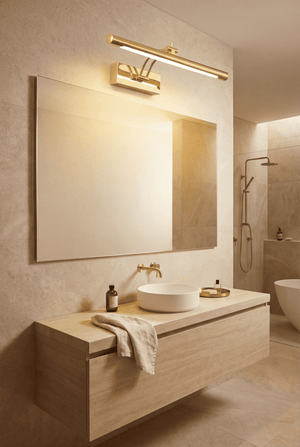
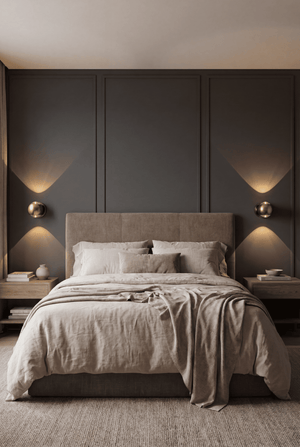
Bedrooms need a subtle approach: gentle lighting for the overall mood, directed lighting for reading, and decorative solutions to personalize the atmosphere. Bedside wall lights free up nightstand space while adding a touch of refined design.
Passageways: combining safety and appearance
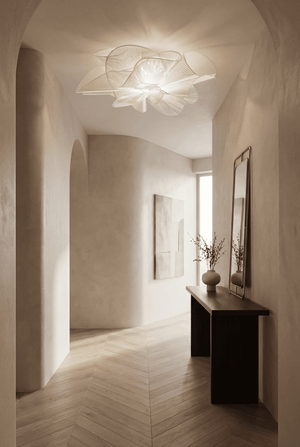
Hallways and stairs need safe yet elegant lighting. Wall lights set the rhythm in these transition spaces while ensuring optimal visibility. Their regular placement creates a decorative sequence that guides the eye and structures the path.
Stair lighting combines safety needs with decorative opportunities. Wall-mounted solutions light up the steps while highlighting the architecture. This practical approach becomes a decorative feature that enhances the entire structure.
Advanced technologies serving design
Technological innovations are transforming the approach to practical lighting decoration. Electronic dimming systems allow you to finely adjust brightness to suit needs and times of day. This technical flexibility multiplies the decorative possibilities of a single fixture.
Connected solutions offer precise control of lighting from intuitive interfaces. Scene programming, automatic adjustment by time, synchronization with natural light: these advanced features serve both appearance and everyday comfort.
The latest LED technology achieves remarkable results in color quality and energy efficiency. This technical excellence allows for bolder designs, free from the heat and energy limits of older technologies.
Architectural integration and custom solutions
Built-in lighting is the ultimate blend of function and decoration. These discreet solutions are visually hidden while delivering outstanding brightness. The architecture itself becomes luminous without revealing its sources, creating magical and sophisticated moods.
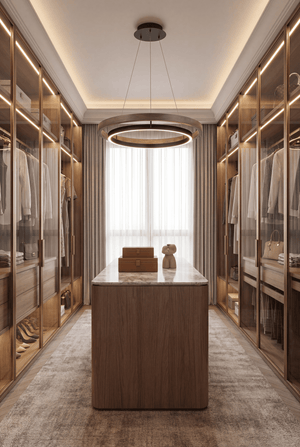
Modern chandeliers embody this evolution: monumental light sculptures that structure the space while providing effective general lighting. Their strong decorative presence transforms interior architecture.
Maintenance and lasting value of designer solutions
The durability of lighting solutions determines their long-term value. Premium LED fixtures need minimal care: regular dusting of shades and cleaning of surfaces according to their material. This easy upkeep preserves their visual impact over time.
Choosing fine materials and lasting finishes ensures your decorative investment stands the test of time. Treated metals resist rust, glass resists sunlight, protective finishes: these technical details keep designer fixtures looking as good as new.
The modularity of lighting systems allows you to change the mood as your decor evolves. This technical flexibility keeps your setup relevant while maintaining its visual harmony.
Frequently asked questions
What brightness should I choose to balance effectiveness and mood?
For optimal lighting, follow these levels: 250-300 lm/m² for work surfaces (kitchen, office), 100-150 lm/m² in the living room, and 50-100 lm/m² in the bedroom. Choose dimmable solutions that let you adjust brightness from 10% to 100% to suit your decorative and practical needs.
At what height should a decorative pendant be installed above a table?
Keep a distance of 70 to 80 cm between the tabletop and the bottom of the pendant. This height ensures effective lighting without glare, while allowing for conversation. For a 2-meter table, choose a pendant 80 to 120 cm wide for the best visual balance.
How do I choose color temperature for each room?
Use warm white (2700-3000K) in living spaces and bedrooms for a cozy mood, neutral white (4000K) in the kitchen and office for focus, and keep cool white (5000-6500K) for technical spaces. A CRI above 90 ensures excellent color accuracy.
How many light sources should I plan for a 25m² living room?
Plan for 4 to 6 different sources: 1 general light (ceiling or central pendant), 2 to 3 accent lights (floor lamps, table lamps), and 1 to 2 decorative lights (wall lights, accent spots). This layering creates a flexible and visually rich atmosphere.