
Outdoor mood lighting: a guide for gentle evenings
Outdoor mood lighting is the key element for turning a simple evening outdoors into a magical and memorable moment. Whether you are planning a romantic dinner, a friendly gathering, or a moment of relaxation after a busy day, the quality and choice of your lighting will set the mood for your evening.
Lighting professionals agree on one essential point: the ideal light intensity for outdoor relaxation spaces is between 50 and 100 lumens per square meter, which is significantly lower than functional lighting. This level creates that sought-after soft evening glow that invites relaxation while still providing enough visibility.
The basics of outdoor mood lighting
Creating successful garden and patio lighting relies on three fundamental technical pillars. The first decisive factor is color temperature: always choose a warm white between 2700K and 3000K for your outdoor evenings. This temperature range mimics the natural warmth of firelight or candles, instantly creating a welcoming atmosphere.
The beam angle is the second crucial parameter. For soft mood lighting fixtures, choose light sources with a wide beam angle, generally over 120 degrees. This feature prevents harsh shadow zones and ensures even light distribution across your relaxation area.
The color rendering index (CRI) should not be overlooked, even for mood lighting. A CRI above 80 ensures faithful color reproduction of your outdoor furniture, plants, and your guests’ faces, contributing to the natural and warm character of the lighting.
Solar lighting solutions for energy independence
Modern solar technologies offer outstanding performance for outdoor mood lighting. Today’s outdoor LED string lights powered by solar energy provide 8 to 12 hours of autonomy after a full charge, enough to last an entire summer evening.
Professional-grade solar markers now include lithium-ion batteries with a capacity of 2000 to 3000 mAh, ensuring optimal operation even on cloudy days. These devices are especially suitable for marking pathways and creating a lit walkway to your relaxation area.
To maximize the efficiency of your solar setup, keep a minimum distance of 50 centimeters between each light point. This spacing ensures a harmonious light flow while optimizing the energy use of each element.
Techniques for soft and adjustable lighting
Soft lighting requires precise control of light intensity. Adjustable lamps allow you to set the brightness between 10% and 100% of their rated power. For mood evenings, generally keep the intensity between 20% and 40% of the maximum power.
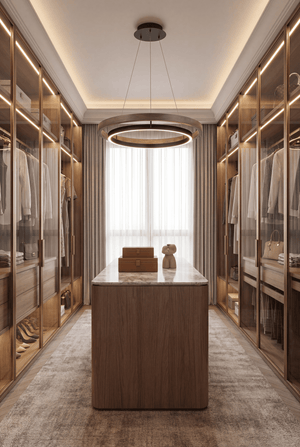
Pendants equipped with electronic dimmers offer fine control over the lighting mood. These devices have the added benefit of significantly extending the lifespan of LED sources, which can reach up to 50,000 hours when used at lower brightness.
LED lanterns with fabric or translucent diffusers naturally create a soft evening light without the need for a complex dimming system. These solutions combine easy installation with visual appeal for your outdoor spaces.
Optimizing colored and chromatic lighting
Adding colored light sources to your outdoor mood lighting opens up new decorative possibilities. RGB LED systems let you change the color to suit the mood, from warm red to calming blue, including purple or green shades for special occasions.
To maintain visual harmony, limit the use of saturated colors to a maximum of 20% of your total lighting. The rest of the setup should keep a warm color temperature to preserve the natural and welcoming look of your space.
Recessed colored LED spotlights, placed at ground level, create spectacular highlighting effects on plants. Install them 1 to 2 meters from the object to be lit for the best effect without glare.
Positioning strategies and installation
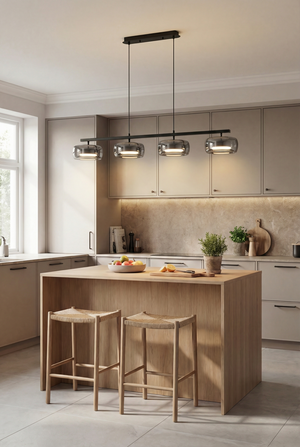
The strategic placement of your lights largely determines the effectiveness of your garden and patio lighting. Choose an installation height between 2.2 and 2.5 meters for outdoor pendants, ensuring even lighting without risk of glare.
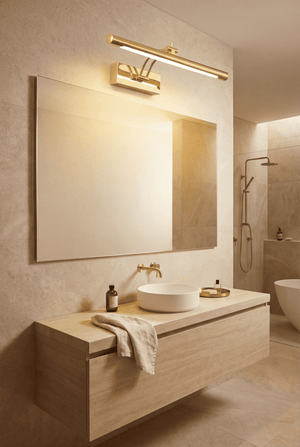
For outdoor wall lights, keep a mounting height of 1.8 to 2 meters from the ground. This position optimizes light spread while preserving the look of your facade or fence walls.
The spacing between light points follows a simple rule: the distance between two sources should not exceed three times their installation height. This proportion ensures continuous lighting without harsh shadow zones or localized overlighting.
Versatile solutions: table lamps and portable lighting
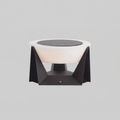
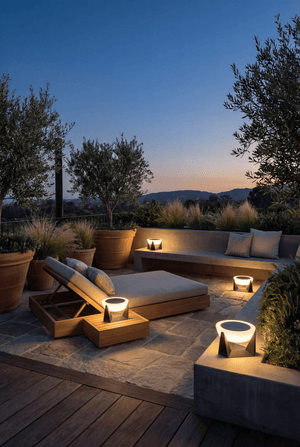
Outdoor table lamps offer exceptional flexibility to adapt your lighting to the needs of each evening. These standalone lights, often equipped with rechargeable batteries, let you create temporary light points where fixed installation is impossible or inconvenient.
Recent models include lithium batteries offering 6 to 24 hours of autonomy depending on the selected brightness. This flexibility lets you adjust lighting duration to match the length of your evening.
For a festive evening, place several soft mood lights at different heights: some on the ground, others raised on your furniture or temporarily hung. This variation in levels creates dynamic and visually rich lighting.
Harmonious combinations and layered lighting
The layering technique involves combining different types of lighting to create a complex and refined atmosphere. Combine low-intensity general lighting, accent lighting on decorative elements, and occasional task lighting for walkways.
Outdoor wall lights provide the base lighting, complemented by string lights for decoration and table lamps for flexibility. This multi-layered approach lets you adjust the mood as your evening evolves.
Maintain color consistency by keeping the same color temperature for all your light sources. Shade variations create a patchy effect that disrupts the overall harmony of your setup.
Technical considerations and outdoor safety
Installing outdoor mood lighting requires strict safety standards. Always check the protection rating (IP) of your lights: a minimum of IP44 is required for sheltered areas, while spaces exposed to the weather need a rating of IP65 or higher.
Outdoor electrical installations must include a residual current device of no more than 30 mA to prevent any risk of electric shock. This protection is especially crucial in damp environments like patios and gardens.
For permanent installations, use buried cables at a minimum depth of 50 centimeters, protected by a standard red TPC sheath. This precaution prevents accidental damage and ensures the longevity of your setup.
Maintenance and performance optimization
Regular maintenance of your outdoor lighting system ensures optimal performance and significantly extends the life of your equipment. Clean the surfaces of your outdoor LED string lights monthly with a dry cloth to remove dust and moisture deposits.
For solar lights, check the condition of the photovoltaic panels every three months. A panel blocked by leaves or debris can lose 30 to 50% of its efficiency, directly affecting the nighttime autonomy of your lights.
Replace LED sources preventively after 25,000 hours of use, even if they are still working. This anticipation avoids untimely failures during your outdoor events and maintains consistent lighting quality.
Personalizing for different types of evenings
Each type of outdoor evening requires a specific lighting approach. For a romantic dinner, choose minimal and localized lighting: 2 to 4 light points at most, placed around your table to create a bubble of intimacy.
Friendly gatherings need more generous lighting, with an overall intensity of 80 to 120 lumens per square meter. This brightness makes social interaction easier while preserving the warm atmosphere typical of mood evenings.
For moments of solitary relaxation, choose outdoor floor lamps with adjustable brightness, allowing you to set the lighting according to your activity: reading, meditation, or simply enjoying your garden.
What light intensity should you choose for outdoor mood lighting?
For optimal outdoor mood lighting, choose an intensity between 50 and 100 lumens per square meter. This level ensures enough visibility while creating the desired soft atmosphere. Avoid exceeding 150 lumens/m², as this would make the lighting too functional for the intended mood.
What color temperature is best for outdoor evenings?
The ideal color temperature for outdoor evenings is between 2700K and 3000K (warm white). This color range mimics the natural warmth of candles and firelight, instantly creating a welcoming and relaxing atmosphere. Avoid temperatures above 3500K, which give a too cold appearance.
How long do the batteries of outdoor solar lights last?
Modern solar lights offer 8 to 12 hours of autonomy after a full charge. Models with lithium-ion batteries of 2000 to 3000 mAh maintain their performance even after cloudy days. Generally, allow 6 to 8 hours of solar charging for a full night’s use.
At what height should you install outdoor pendant lights?
Install your outdoor pendants at a height between 2.2 and 2.5 meters from the ground for optimal mood lighting. This height ensures even light spread without risk of glare. For wall lights, keep a mounting height of 1.8 to 2 meters for the best look and function.