Optimal home lighting: Complete room-by-room guide 2024

Lighting is one of the fundamental elements of interior design, directly influencing the comfort, functionality, and aesthetics of your home. Optimal home lighting requires a methodical approach, tailored to the specifics of each space and its daily uses.

The fundamentals of modern interior lighting

Contemporary lighting is based on three distinct layers that harmoniously complement each other. General lighting provides a uniform light base of 100 to 150 lumens per square meter for living spaces, while task lighting reaches 250 to 300 lumens per square meter on work surfaces. Accent lighting, meanwhile, creates focal points with variable intensities depending on the desired effect.

Color temperature plays a decisive role in the overall ambiance. Warm white between 2700K and 3000K promotes relaxation and is perfect for resting areas, neutral white at 4000K optimizes concentration in offices, while cool white from 5000K to 6500K stimulates activity in kitchens and bathrooms.

Living room: creating a friendly and adaptable atmosphere

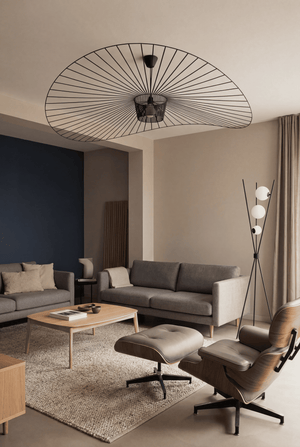
The living room, the central space of family life, requires particularly thoughtful room-by-room lighting. General lighting relies on designer ceiling lights or evenly distributed recessed spotlights, delivering 100 to 150 lumens per square meter. This lighting base should be complemented by strategically positioned supplementary sources.

Ambient floor lamps placed in corners create warm indirect light, ideal for relaxing evenings. Position table lamps near sofas at reading height, about 40 centimeters above the armrest. Dimmers allow you to adjust the intensity according to activities: 200 to 300 lux for reading, 50 to 100 lux for watching television.

Accent lighting enhances decorative elements with directional spotlights featuring a 30-degree beam angle for artworks, creating a 3:1 light contrast compared to ambient lighting.

Technical optimization of the living room

Opt for dimmable LED bulbs with a CRI above 90 for excellent color rendering. The lifespan of 25,000 to 50,000 hours ensures a long-lasting investment. E27 bases offer the widest variety of wattages and shapes, while GU10s are perfect for directional spotlights.

Bedroom: sanctuary of rest and intimacy

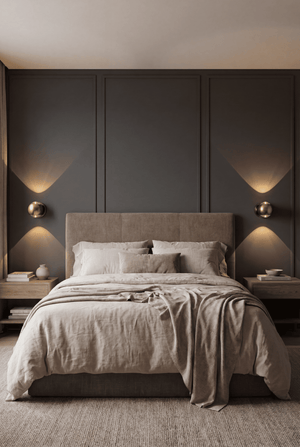
The bedroom requires a carefully chosen LED color temperature lighting to promote melatonin production. Limit general lighting to 50 to 100 lumens per square meter with indirect sources that prevent glare. Bedside lamps are the central element, positioned 60-70 centimeters from the floor when you are sitting in bed.

For nighttime reading, opt for adjustable wall lights delivering 300 to 500 lux directly onto the book, without disturbing your partner. Fabric lampshades pleasantly diffuse the light while creating a cozy atmosphere. Absolutely avoid temperatures above 3000K after 8 p.m. to preserve circadian rhythms.

Discreet accent lighting, such as LED strips behind the headboard or recessed spotlights with dimmers, allows you to create a romantic atmosphere with only 10 to 20 lumens per square meter.

Kitchen: performance and safety above all

The kitchen demands the highest performance in terms of functional lighting. General lighting reaches 150 to 200 lumens per square meter via IP44 recessed spotlights resistant to humidity. Even distribution prevents dangerous shadow zones when handling sharp utensils.

Worktops require intense directional lighting of 250 to 300 lumens per square meter. LED strips under the upper cabinets, positioned 35-40 centimeters above the worktop, eliminate cast shadows. Choose a color temperature of 4000K to 5000K for optimal food rendering and activity stimulation.

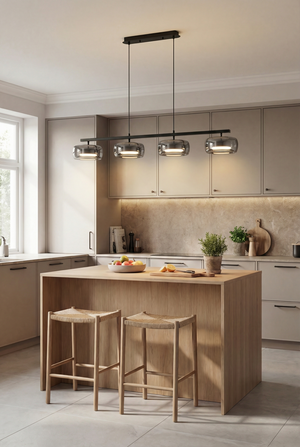
Above the central island, designer pendant lights installed 70-80 centimeters above the surface create ambient lighting while visually defining the space. Choose models with diffusers to avoid direct glare.

Advanced technical solutions

Presence sensors optimize energy consumption by automatically activating the lighting when someone passes by. LED-compatible dimmers allow you to adjust the intensity according to the moment: maximum lighting for cooking, soft ambiance for family meals.

Bathroom: combining functionality and well-being

The bathroom combines technical constraints and specific aesthetic needs. General lighting of 100 to 150 lumens per square meter relies on fixtures with at least IP44, ideally IP65 in the shower area. Even distribution avoids pronounced contrasts that create unpleasant reflections on tiled surfaces.

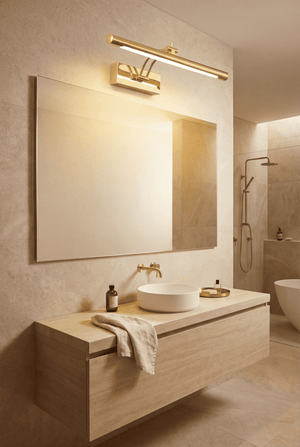
Mirror lighting is the critical element for daily care. Two wall sconces positioned on each side of the mirror at 160-170 centimeters from the floor provide uniform facial lighting of 300 to 500 lux. This side configuration eliminates shadows under the eyes and chin, unlike overhead lighting.

For the bathtub area, soft ambient lighting of 20 to 50 lumens per square meter creates a spa-like atmosphere conducive to relaxation. Dimmable recessed spotlights or waterproof LED strips offer an elegant and safe solution.

Office and workspaces: optimized productivity

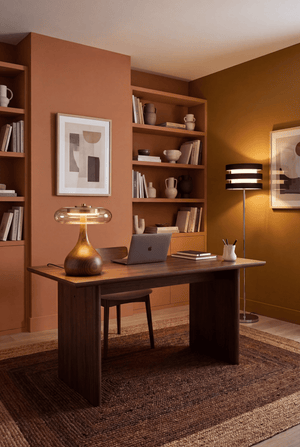
The home workspace requires ergonomic lighting to prevent visual fatigue. General lighting of 200 to 300 lumens per square meter is complemented by task lighting reaching 500 to 1000 lux on the work surface. A color temperature of 4000K to 5000K maintains alertness and improves concentration.

Position the light source perpendicular to the screen to avoid reflections. An adjustable desk lamp with an articulated arm allows you to precisely direct the beam according to the task: indirect lighting for typing, direct for reading documents. Models with adjustable intensity and temperature adapt to natural circadian variations.

Accent lighting enhances decorative elements while reducing excessive contrasts between the screen and the environment, thus decreasing eye strain during prolonged use.

Smart lighting technologies

Connected lighting systems allow you to program automatic scenarios that reproduce the natural variations of light. The intensity and temperature change gradually, stimulating activity in the morning and promoting relaxation in the evening.

Hallways and stairs: safety and fluidity

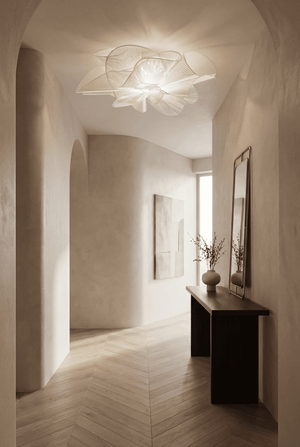
These circulation areas require permanent and uniform safety lighting. An intensity of 50 to 100 lumens per square meter is sufficient for safe movement, with peaks of 150 lumens at level changes. Motion detectors automatically activate the lighting, optimizing consumption while ensuring safety.

In staircases, position light sources to avoid casting shadows on the steps. Lighting under each step or wall sconces spaced 2 to 3 meters apart ensure optimal visibility. The neutral color temperature of 4000K improves the perception of contours and obstacles.

Dining room: the stage for conviviality

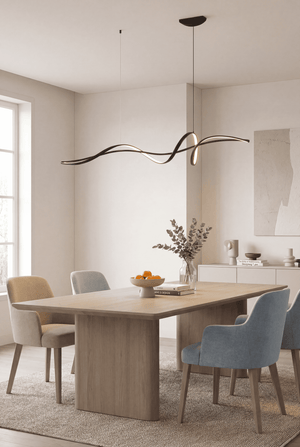
The dining room orchestrates moments of sharing around functional and ambient lighting solutions. A central pendant positioned 70–80 centimeters above the table creates direct lighting of 150 to 200 lux on the dining surface. Ideally, the fixture diameter should be 50 to 60% of the table width for harmonious balance.

Peripheral lighting completes the setup with wall sconces or auxiliary floor lamps delivering 50 to 100 lumens per square meter in the room. This combination prevents excessive contrast between the lit table and the dark surroundings, reducing eye strain during long meals.

A dimmer allows you to adapt the ambiance to the occasion: bright lighting for daily family meals, soft lighting for romantic dinners or gatherings.

Energy optimization and sustainability

LED lighting is now the standard for energy performance, with 80% less consumption compared to incandescent bulbs. The exceptional lifespan of 25,000 to 50,000 hours quickly offsets the higher initial investment.

Designer indoor lighting fixtures now incorporate advanced technologies: automatic adjustment based on outdoor brightness, scheduled programming, remote control via smartphone. These features optimize energy consumption while enhancing user comfort.

Choose CRI values above 80 for good color rendering, ideally above 90 for main living spaces. This characteristic directly influences the perception of furniture colors and the overall visual quality of the interior.

Personalization according to lifestyles

Adapt your home lighting ambiance choices to your daily habits. Early risers will favor dynamic lighting with temperatures shifting from 6500K in the morning to 2700K in the evening. Night workers will opt for solutions that allow them to artificially maintain circadian rhythms.

Families with children will include automatic nightlights in hallways and gradual lighting in bedrooms. Book lovers will multiply directional sources near armchairs and sofas. Cooking enthusiasts will install enhanced lighting on all work surfaces.

This customization transforms lighting from a simple utility function into a true tool for well-being, enhancing and elevating every moment of domestic life. Investing in quality lighting adds lasting value to your home while significantly improving your daily life.

What lighting power should you plan per room?

For a living room, allow for 100 to 150 lumens per m² for general lighting, 250-300 lm/m² for kitchen worktops, and 50-100 lm/m² in bedrooms. These values ensure optimal visual comfort according to the use of each space.

Which color temperature should you choose for each room?

Choose warm white 2700-3000K in bedrooms and living rooms for relaxation, 4000K in offices for concentration, and 5000-6500K in the kitchen and bathroom to stimulate activity. This gradation supports your natural biological rhythms.

At what height should you install pendants and wall lights?

Hang your lights 70-80 cm above tables, position wall sconces 170-180 cm from the floor, and maintain a minimum height of 210 cm between the floor and any hanging light in passageways to avoid any risk of collision.

How many light points should you plan per room?

Install 1 light point per 4-5 m² for general lighting, complemented by 2-3 additional sources depending on usage. Thus, a 20m² living room requires 4-5 ceiling spots plus 2-3 ambient lamps for complete and flexible lighting.

Back to blog