
How to choose the perfect light fixture for your veranda
A veranda is a unique transition space between the inside and outside of your home. To fully enjoy this privileged environment, choosing the right veranda light fixture is crucial. Between humidity constraints, temperature variations, and specific lighting needs, several technical criteria deserve your attention.
This glazed space requires a special approach to lighting. Significant thermal variations and direct sun exposure impose precise technical requirements to ensure the durability and efficiency of your lighting installation.
The specific technical constraints of veranda lighting
A veranda environment presents unique challenges for installing a lighting system. Temperature differences can reach 20 to 30°C between summer and winter, requiring fixtures with appropriate thermal resistance. LED technology is the natural choice, with an optimal operating range between -20°C and +50°C.
Humidity levels are also a critical factor. A veranda can experience significant humidity fluctuations, especially during seasonal changes. The IP protection rating then becomes essential: choose at least an IP44 rating to withstand water splashes and ambient humidity.
The abundant natural light in this space calls for thought about lighting balance. Your veranda lighting must offset the strong daytime brightness while creating a warm atmosphere in the evening. A dimming system becomes essential to adapt the lighting to different times of day.
Veranda pendant light: functional elegance
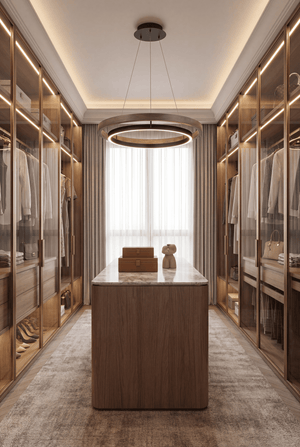
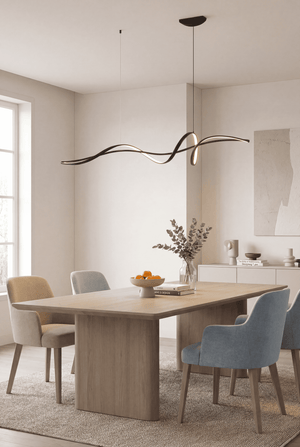
The veranda pendant light is often the preferred choice for creating effective main lighting. Its central position provides even light distribution across the entire space. For a standard-size veranda, a pendant with a 60 to 80 cm diameter offers optimal light coverage.
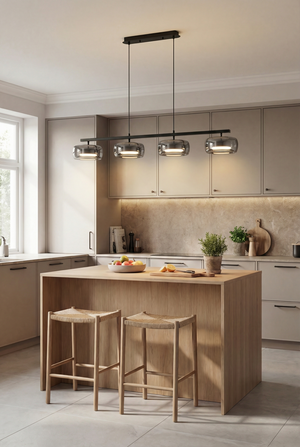
The installation height deserves special attention. Keep a minimum distance of 2.10 meters between the floor and the bottom of the pendant to avoid any risk of collision. For a dining table, maintain a distance of 70 to 80 cm above the tabletop for comfortable lighting without glare.
The materials for your pendant light must withstand environmental stresses. Anodized aluminum, stainless steel, or high-strength polymers ensure optimal durability in the face of climate variations. Avoid finishes that are sensitive to oxidation, as they could deteriorate prematurely.
Suitable output and color temperature
For main conservatory lighting, aim for an output of 300 to 400 lumens per square meter. This level effectively makes up for the lack of natural light in the evening while maintaining optimal visual comfort. LED technology delivers this performance with lower consumption of 15 to 25 watts for a standard pendant light.
Color temperature directly influences the atmosphere of your space. A warm white from 2700K to 3000K creates a welcoming ambiance, ideal for relaxing moments. For more functional use, such as reading or meals, choose a neutral white from 3500K to 4000K, which improves detail perception.
Conservatory ceiling light: a discreet and effective solution
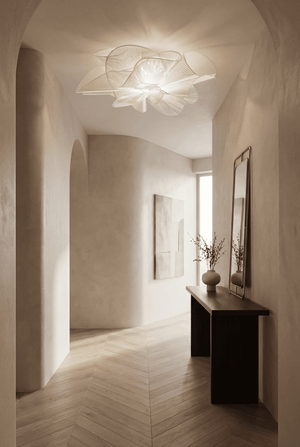
The conservatory ceiling light is an appealing alternative when ceiling height creates clearance constraints. This flush lighting solution optimizes the available space while preserving the look of your conservatory. Wide-diffusion models ensure even light distribution.
Installing a ceiling light requires special attention to the watertightness of the mounting point. Cable routing must be perfectly watertight to prevent moisture ingress. Use suitable cable glands and regularly check the condition of the sealing gaskets.
The shape and size of the diffuser directly affect lighting quality. A circular ceiling light with a 40 to 50 cm diameter suits a 15 to 20 square meter conservatory. For larger spaces, choose several light points evenly distributed rather than a single oversized ceiling light.
Advanced lighting technologies
Modern LED ceiling lights include advanced features particularly suited to conservatory use. Automatic dimming according to ambient brightness optimizes visual comfort while saving energy. Some models even offer adjustable color temperature to match the circadian rhythm.
SMD (Surface Mounted Device) technology offers an exceptional lifespan of 25,000 to 40,000 hours, maintaining a luminous flux above 80% throughout the period. This longevity is especially valuable in an environment where access for maintenance can be difficult.
Supplementary lighting and ambiance
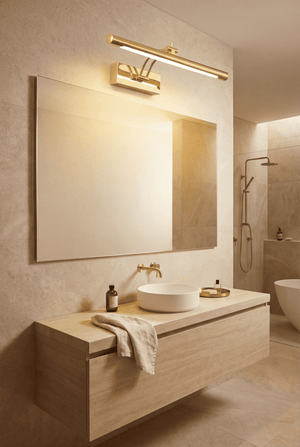
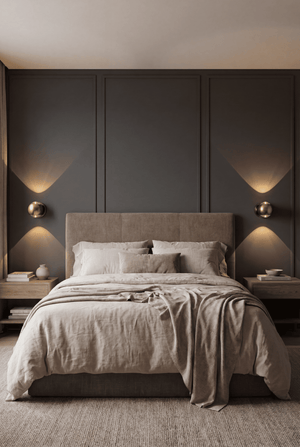
Complementing your main conservatory lighting with additional light sources enhances the ambiance and functionality of the space. Wall sconces create warm indirect lighting, particularly effective for visually defining different activity areas.
Installing wall lights requires compliance with specific safety standards. Place them at a height of 1.70 to 1.80 meters for optimal, glare-free lighting. A 60 to 90-degree beam angle helps create soft pools of light that enhance your conservatory’s architecture.
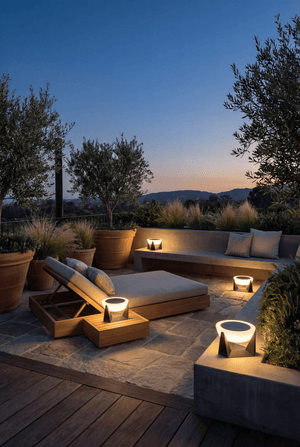
Table lamps offer welcome flexibility, allowing you to adapt the lighting to your activities. Choose models with at least IP44 protection, and opt for cordless versions equipped with high-capacity LED batteries to avoid wiring constraints.
Decorative enhancement
Decorative lighting turns your conservatory into a true living space in the evening. Integrated LED strips built into the structures highlight the architecture while creating sophisticated indirect lighting. This solution requires planning from the design stage to discreetly integrate the mounts and power supplies.
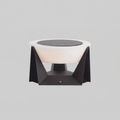
Our collection of designer pendant lights offers models specially designed to withstand environmental constraints while adding a touch of elegance to your conservatory.
Key technical selection criteria
Choosing a fixture for a conservatory requires analyzing several decisive technical parameters. The color rendering index (CRI) should be at least 80, ideally 90, to faithfully reproduce the colors of your furniture and plants. This characteristic is particularly important in a space where natural light is the reference.
Compatibility with dimming systems is a key comfort criterion. Make sure your fixtures support trailing-edge dimmers specially designed for LED loads. This technology prevents flickering and ensures smooth dimming of light intensity.
The beam angle directly affects the effectiveness of your lighting. For general lighting, choose a wide 120-degree beam angle to ensure even coverage. Accent lighting requires a narrower 30 to 45-degree angle to create specific visual effects.
Power supply and electrical installation
The power supply for your conservatory lighting must comply with current safety standards. Installing a dedicated circuit with 30 mA residual-current protection ensures people’s safety and protects the equipment. This requirement is even more essential in an environment with moisture risks.
Cable cross-section must be calculated based on total wattage and the distance between the electrical panel and the light points. For a standard installation, a 1.5 mm² copper cross-section is suitable for circuits up to 16 amps. Make sure to protect the cables in waterproof ICTA conduits.
Our designer ceiling lights incorporate high-efficiency LED drivers that ensure stable power and optimal lifespan, even under the demanding conditions of a veranda.
Lighting solutions by veranda type
Each type of veranda calls for specific lighting solutions depending on its architecture and use. A Victorian veranda, with its ornate structure, requires lighting that respects its authentic character. Choose classic-style fixtures with brass or patinated bronze finishes to preserve aesthetic harmony.
Contemporary verandas allow a more modern approach with clean lines and innovative materials. Brushed aluminum, stainless steel, or matte black finishes fit perfectly into these design-focused environments. Geometric shapes and integrated LED lighting enhance the contemporary look.
For a Mediterranean-style veranda, opt for fixtures with warm finishes such as wrought iron or rust-effect aluminum. Amber glass lampshades or synthetic rattan diffusers create an authentic ambiance in harmony with this architectural style.
Adapting to how the veranda is used
The intended use of your veranda largely determines the characteristics of the lighting required. A living-room veranda favors ambiance, with soft lighting of 100 to 150 lumens per square meter, complemented by adjustable auxiliary sources. This setup creates an atmosphere conducive to relaxation and togetherness.
A home-office veranda requires more intense task lighting of 300 to 500 lumens per square meter with a color temperature of 4000K to promote concentration. Adding spot lighting prevents shadowy areas on the work surface and reduces eye strain.
For a greenhouse veranda or winter garden, lighting must take into account the specific needs of plants. Horticultural LEDs with an appropriate spectrum can complement decorative lighting to sustain plant growth during periods of low natural light.
Optimal installation and maintenance
Installing your veranda light fixture requires careful preparation to ensure its durability. Mounting the fixtures must take into account the type of structure of your veranda. Aluminum frames require specific fastening systems to avoid galvanic corrosion between different metals.
Waterproofing roof penetrations is a critical point of the installation. Use suitable sealing sleeves and follow drainage slopes to avoid water pooling. An annual check of these sensitive points prevents leaks and extends the lifespan of your installation.
Preventive maintenance for your veranda lighting is generally limited to regular cleaning of the diffusers and visual inspection of the mountings. LED technology considerably reduces interventions thanks to its exceptional longevity and low heat output.
Energy optimization
The energy efficiency of your veranda lighting directly affects your operating costs. High-efficiency LEDs achieve outputs of 100 to 120 lumens per watt, i.e., 5 to 8 times more than traditional technologies. This performance results in a substantial reduction in electricity consumption.
The integration of brightness sensors automatically optimizes lighting intensity according to the available natural light. These smart systems can reduce consumption by 30 to 50% while maintaining an optimal comfort level. Some models also include a presence-detection function to limit lighting to occupied periods only.
Discover our selection of designer chandeliers perfectly suited to large verandas that require prestigious decorative lighting.
Trends and innovations in veranda lighting
Technological progress is transforming veranda lighting possibilities with the emergence of connected and programmable solutions. Smart light fixtures make it possible to create customized lighting scenes depending on the time of day or the activities carried out in your veranda.
The tunable white technology is revolutionizing the approach to lighting by allowing the color temperature to vary from 2700K to 6500K. This feature replicates natural variations in sunlight and promotes well-being by respecting natural biological rhythms.
Integrating environmental sensors allows modern systems to automatically adjust lighting based on temperature, humidity, or even air quality. These innovations turn your veranda into an intelligent space that continually adapts to optimal comfort conditions.
Decorative lighting and staging
New approaches to lighting design are turning the veranda into a true theater of light. Using RGB lighting makes it possible to create colorful atmospheres according to your preferences or the seasons. These decorative effects fit perfectly into an ambient-lighting approach that complements the main lighting.
Miniaturized projection systems open up new creative possibilities by allowing you to cast light patterns onto the surfaces of your veranda. This technology is especially well suited to special events or for creating original festive atmospheres.
Our collection of wall sconces offers innovative models specially designed for accent lighting in a veranda, combining resistance to environmental constraints with contemporary design.
Frequently asked questions about veranda lighting
What lighting output should you plan for a 20 m² veranda?
For a 20 m² veranda, plan for main lighting of 6000 to 8000 lumens distributed across several light points. This output corresponds to 300–400 lumens per square meter, the recommended standard for comfortable general lighting. Add 2000 to 3000 lumens of accent lighting to adjust the mood to your needs.
Which IP rating should you choose for a veranda light fixture?
Choose at least an IP44 rating to ensure protection against water splashes and ambient humidity. If your veranda has a risk of significant condensation, opt for an IP54 rating, which offers enhanced protection against dust and water splashes from all directions.
At what height should you install a pendant light in a veranda?
Maintain a minimum height of 2.10 meters between the floor and the bottom of the pendant light to avoid collision risks. Above a dining table, keep 70 to 80 cm between the tabletop and the pendant for optimal lighting without direct glare.
How can you prevent veranda light fixtures from overheating in summer?
Choose LED light fixtures that give off 80% less heat than traditional technologies and operate efficiently up to 50°C. Ensure sufficient natural ventilation and avoid installing fixtures that are directly exposed to the sun during the hottest hours of the day.