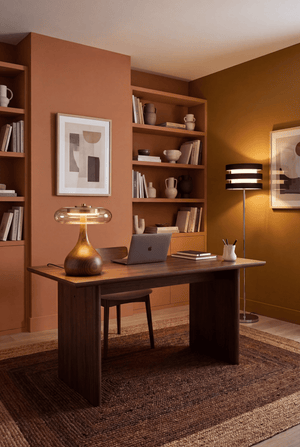
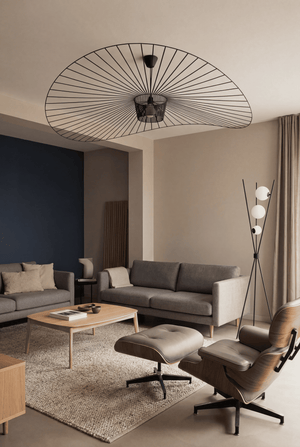
Luxury Minimalist Light Fixtures: Clean Design and Refined Elegance

Luxury Minimalist Light Fixtures: Clean Design and Refined Elegance

The Evolution of Minimalism in Luxury Lighting

Minimalism in the world of luxury minimalist lighting fixtures transcends the simple notion of simplicity to achieve remarkable sophistication. This design philosophy favors the essential, transforming each lighting element into an exceptional piece where the purity of lines meets the excellence of materials.

The minimalist approach to lighting is based on a deep understanding of space and light. The creators of premium contemporary lighting fixtures master the art of designing pieces that, despite their apparent simplicity, reveal remarkable technical and aesthetic complexity. This approach is part of a constant search for balance between functionality and beauty.

The Fundamentals of Refined Lighting Design

Refined designer lighting is characterized by pure geometric shapes and harmonious proportions. These fixtures showcase the intrinsic beauty of noble materials: brushed brass, polished stainless steel, hand-blown glass, and selected marble. Each material brings its own visual and tactile signature.

Color temperature plays a crucial role in these creations. Minimalist lighting generally favors a warm white between 2700K and 3000K to create a welcoming atmosphere, or a neutral white at 4000K for workspaces. The color rendering index (CRI) consistently exceeds 90 on high-end models, ensuring faithful color reproduction.

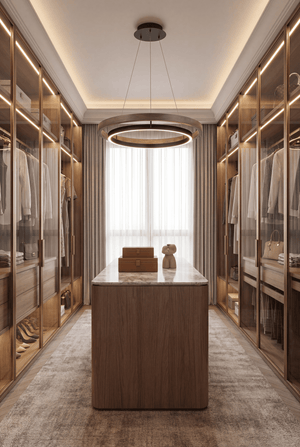
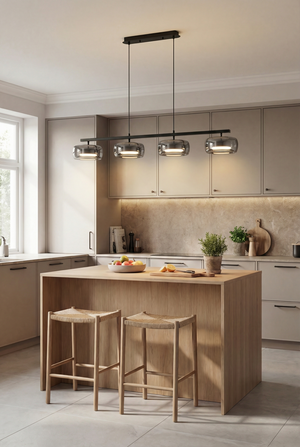
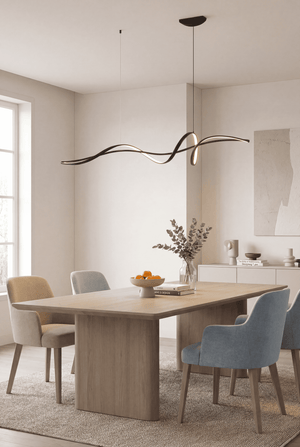
Designer pendant lights perfectly embody this philosophy. Their clean lines and noble materials transform lighting into a structuring architectural element, capable of completely redefining the perception of a space.

The Art of Pure Geometry

Simple geometric shapes – circle, square, rectangle, sphere – form the basic vocabulary of minimalist design. However, their execution in exceptional materials reveals an unsuspected sophistication. A high-end minimalist chandelier in the shape of a perfect circle, crafted from solid brass with a satin finish, becomes a luminous sculpture of striking elegance.

Machining precision reaches tolerances on the order of a tenth of a millimeter. This accuracy gives the fixtures a remarkable visual presence, where every detail contributes to overall harmony. Perfectly polished edges, invisible welds, and flawless finishes attest to artisanal expertise.

Excellence of Materials and Finishes

Noble materials are the soul of luxury minimalist lighting fixtures. The choice is oriented toward durable and aesthetically remarkable materials: anodized aluminum, patinated bronze, cut crystal, or glazed ceramic. Each material undergoes specific treatments to optimize its aesthetic properties and longevity.

The manufacturing process incorporates centuries-old artisanal techniques and contemporary technologies. Mouth-blown glass, hand-polished metal, or cut crystal require particular expertise. These skills give the creations a human and authentic dimension.

Contemporary chandeliers perfectly illustrate this pursuit of material excellence. Their metal structures undergo sophisticated surface treatments: anodizing, galvanizing, chemical patina, or high-resistance powder coating. These processes ensure exceptional durability while preserving aesthetic appeal.

Technological Innovation and Artisan Tradition

LED technology is revolutionizing minimalist lighting by offering unprecedented creative possibilities. Light-emitting diodes, with their 25,000 to 50,000 hour lifespan, blend seamlessly into clean designs. Their low heat emission allows for configurations impossible with traditional technologies.

Dimming systems offer precise control of light intensity, from 1 to 100% without flicker. This modularity allows lighting to be adapted to different times of day and activities. Compatible electronic dimmers ensure smooth and silent variation.

Architectural and Spatial Integration

Minimalist architectural lighting transforms the perception of space by creating subtle plays of shadow and light. The fixtures become structuring elements that give rhythm and hierarchy to the volumes. This approach requires a nuanced understanding of proportions and spatial relationships.

The installation heights follow precise rules: 70 to 80 cm between a pendant light and a tabletop, at least 2.10 m of free height above the floor to avoid collision risks. These measurements ensure optimal visual comfort and safe use.

The beam angle is a crucial parameter. A 30-degree beam creates accent lighting, 60 degrees is suitable for general lighting, while 120 degrees provides ambient light. This variety allows for creating different atmospheres according to needs.

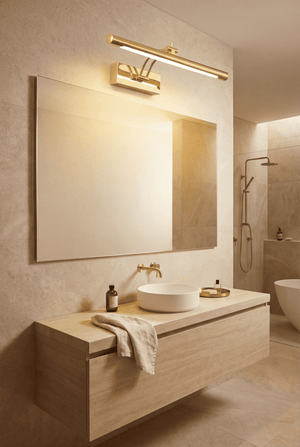
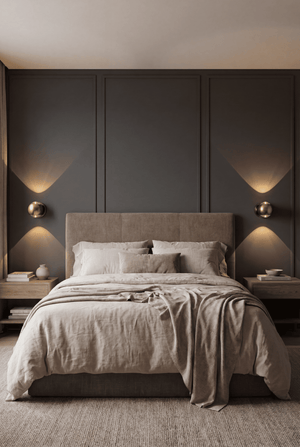
Designer wall sconces are ideally installed at a height of between 1.70 m and 1.80 m to optimize light distribution while avoiding glare. Their architectural integration requires careful planning from the design stage of the spaces.

Functional and Ambient Lighting

The light output adapts to the specific uses of each space. A kitchen worktop requires 250 to 300 lumens per square meter, a living room 100 to 150 lm/m², while a bedroom only needs 50 to 100 lm/m². This modulation allows for creating atmospheres appropriate to each function.

Multifunctional lighting fixtures combine direct and indirect lighting to enhance the visual experience. This duality allows for playing with contrasts and creating remarkable spatial depth. Indirect lighting, reflected off surfaces, softens shadows and creates an enveloping atmosphere.

Smart Technologies and Connectivity

The integration of smart technologies into minimalist lighting fixtures is revolutionizing the user experience. Wireless control systems allow intuitive operation via smartphone or tablet. This connectivity offers advanced features: scheduling, presence detection, automatic adjustment according to ambient brightness.

The built-in motion sensors optimize energy consumption by activating the lighting only when occupants are present. This feature is particularly useful in circulation areas: hallways, staircases, entrances. The sensitivity can be precisely adjusted to avoid unwanted activations.

Colorimetric synchronization allows the color temperature to be adjusted according to the time of day and activity. Warm white light in the evening promotes relaxation, while cool white in the morning stimulates alertness. This circadian modulation respects natural biological rhythms.

Contemporary floor lamps now include USB charging ports and discreet speakers. This technological convergence transforms lighting into a true multimedia hub, without compromising minimalist aesthetics.

Energy Efficiency and Sustainability

The energy efficiency of LED lighting fixtures now reaches 150 to 200 lumens per watt, which is 80% higher performance than traditional technologies. This optimization results in a significant reduction in electricity consumption and associated CO2 emissions.

Recyclable materials make up the majority of these lighting fixtures: aluminum, steel, glass. This eco-friendly approach is part of a sustainable development initiative. Modular design makes maintenance and component replacement easier, extending useful lifespan.

Contemporary Styles and Trends

Neo-minimalism enriches the traditional approach by integrating subtle textural elements. Brushed surfaces, natural patinas, and matte finishes bring a refined tactile dimension. This evolution preserves the purity of lines while adding sensory richness.

The Scandinavian influence is evident in the use of natural materials: light wood, linen, leather. This approach humanizes minimalist aesthetics by creating warm and welcoming atmospheres. Hybrid lighting fixtures combine metal and wood in balanced proportions.

The Japanese wabi-sabi movement inspires creations that celebrate controlled imperfection. Deliberate irregularities, subtle asymmetries, and visible handcrafted finishes give each piece a unique personality. This philosophy stands in contrast to industrial perfection, favoring authenticity.

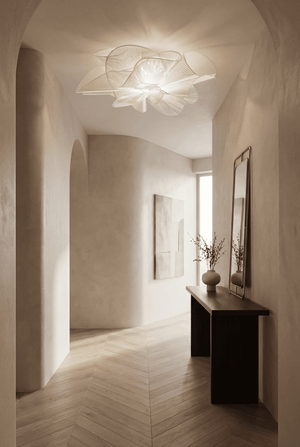
Designer ceiling lights adopt organic shapes inspired by nature: polished pebbles, water droplets, floral corollas. These biological references soften the traditional geometric rigor while maintaining the characteristic purity of the style.

Customization and Bespoke

Customization is becoming a key criterion in the choice of luxury lighting fixtures. Manufacturers offer customization options: choice of finishes, adapted dimensions, specific configurations. This flexibility allows each fixture to be perfectly adapted to its environment.

Bespoke design services integrate lighting into a comprehensive approach to interior planning. Designers analyze the architecture, orientation, uses, and aesthetic preferences to propose unique solutions. This approach ensures harmonious and functional integration.

Maintenance and Longevity

Preventive maintenance of luxury minimalist lighting fixtures requires specific protocols. Cleaning of metal surfaces is done with non-abrasive products to preserve the finishes. Glass and crystals require delicate care with microfiber cloths and suitable products.

The modularity of components makes corrective maintenance easier. LED modules, electronic drivers, and optics can be replaced individually without fully disassembling the fixture. This streamlined design reduces maintenance costs and minimizes intervention times.

Extended warranties generally cover high-end lighting fixtures for periods of 5 to 10 years. This coverage reflects manufacturers' confidence in the quality of their products. Specialized after-sales services provide expert technical support.

The constant evolution of designer lamps incorporates technological innovations while preserving timeless aesthetic codes. This approach ensures the longevity of investments and compatibility with future developments.

Investment and Heritage Value

Luxury minimalist lighting fixtures are sustainable heritage investments. Their quality craftsmanship, noble materials, and timeless design give them a value that is maintained or even increases over time. This heritage aspect justifies the higher initial investment.

The traceability of materials and certification of manufacturing processes provide guarantees on origin and quality. Environmental labels and durability certifications add value to these products for customers who are aware of contemporary ecological issues.

Frequently Asked Questions about Luxury Minimalist Light Fixtures

What LED power should you choose for a minimalist light fixture depending on the room?

For a living room, opt for 100 to 150 lumens per m² with LEDs of 2700K to 3000K color temperature. A kitchen requires 250 to 300 lumens per m² on work surfaces with a CRI above 90 for accurate color rendering. A bedroom only needs 50 to 100 lumens per m² with dimmable lighting to suit different times of day.

At what height should a minimalist pendant be installed above a table?

Maintain a distance of 70 to 80 cm between the bottom of the pendant and the tabletop for optimal lighting without glare. For standard dining tables (75 cm high), position the fixture between 145 and 155 cm from the floor. Make sure to keep a minimum clearance height of 2.10 m for circulation.

How much does a luxury minimalist light fixture cost and what is its lifespan?

High-end minimalist light fixtures range between €500 and €5,000 depending on complexity, materials, and the designer's reputation. Integrated LEDs offer a lifespan of 25,000 to 50,000 hours, or 15 to 30 years of normal use. The investment is justified by the quality of the materials, artisanal finishes, and extended warranties of 5 to 10 years.

How do you maintain and clean a minimalist light fixture made from fine materials?

Clean metal surfaces with a slightly damp microfiber cloth and a neutral product pH 7. Avoid abrasive products that scratch finishes. For glass and crystal, use a water/white vinegar mixture (90/10) and dry immediately. Perform maintenance with the light fixture turned off and cooled down, on a monthly basis to preserve the shine of the materials.

OUR OTHER POSTS