
Mirrors and Light Fixtures: The Perfect Pairing to Create a Sense of Grandeur in Your Interior
The combination of mirror and light fixture is one of the most effective decorative solutions for radically transforming the perception of your interior spaces. This strategic pairing relies on precise optical principles that multiply both natural and artificial brightness while creating a striking illusion of depth. Interior design professionals regard this technique as an architectural lever capable of increasing the sense of volume by 30 to 50% depending on the configuration.
The modern illuminated mirror now incorporates advanced LED technologies that deliver between 300 and 800 lumens per linear metre, with an adjustable colour temperature between 2700K and 6500K. This technical versatility offers endless decorative possibilities, from a warm ambience to high-precision functional lighting. Pairing it with well-positioned complementary light fixtures amplifies this architectural effect to create truly transformative atmospheres.
The optical principles of the illuminated mirror effect
A mirror's ability to reflect up to 95% of incident light is the foundation of its decorative effectiveness. This physical property turns every light source into a virtual double source, instantly multiplying the perceived luminous flux in the space. A quality mirror with a reflection coefficient above 90%, combined with 400 lm/m² lighting, generates a brightness equivalent to 760 lm/m² in the reflected zone.
The placement angle determines the effectiveness of this light amplification. A mirror positioned facing a window captures and redistributes natural light across 180 degrees, creating a second, artificial daylight source. For artificial fixtures, an angle of 30 to 45 degrees relative to the source optimises diffusion without creating direct glare. This geometry can double the perceived brightness while maintaining optimal visual comfort.
The depth of field created by the reflection produces a visual extension of 1.5 to 2 times the room's actual dimension. This optical phenomenon works particularly well in spaces between 8 and 20 m², where the brain naturally interprets the reflection as spatial continuity. Adding peripheral LED lighting at 2700K to 3000K enhances this illusion by creating a gradual light transition between the real space and its reflection.
Choosing the right illuminated mirror for your space
The mirror's dimensions directly determine the intensity of the spatial enlargement effect. For a 12 m² room, an 80 x 100 cm mirror is the minimum needed to generate a significant visual impact, while a 120 x 180 cm format creates a genuine architectural transformation. The optimal ratio is between one third and half of the available wall surface to maximise the effect without visually overloading the space.
The mirror's shape distinctly influences spatial perception. A vertical rectangular mirror of 60 x 140 cm visually raises the ceiling by 20 to 30 cm, ideal for spaces with a ceiling height under 2.40 m. Conversely, a horizontal format of 140 x 80 cm broadens the perception of width, particularly effective in hallways and narrow rooms. XXL round mirrors of 100 to 150 cm in diameter soften angles and create an organic focal point that diffuses light evenly across 360 degrees.
The integrated lighting should deliver a power of 15 to 25 W per linear metre of frame for effective functional lighting. Premium models offer LED strips with a CRI above 90, guaranteeing faithful colour rendering essential for grooming areas. The dimmable function allows the intensity to be adjusted between 10 and 100%, offering versatility between nighttime ambient lighting and daytime precision lighting.
Pairing mirrors and light fixtures to maximise the effect
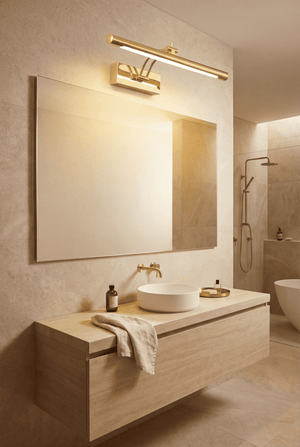
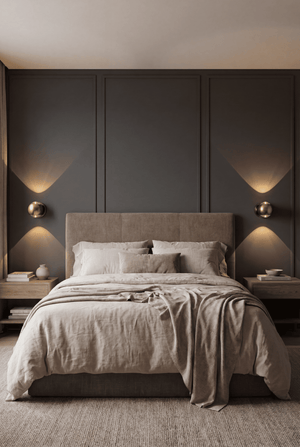
Installing side wall lights positioned 1.70-1.80 m from the floor and spaced 80 to 120 cm from the mirror creates optimal facial lighting without cast shadows. This configuration delivers a luminous flux of 400 to 600 lumens per fixture, ideally complementing the mirror's integrated lighting to reach the recommended 300 lm/m² in grooming areas. Discover our selection of designer wall lights that enhance the mirror effect.
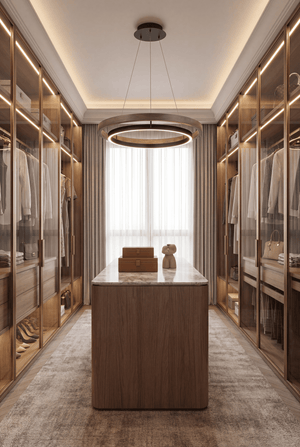
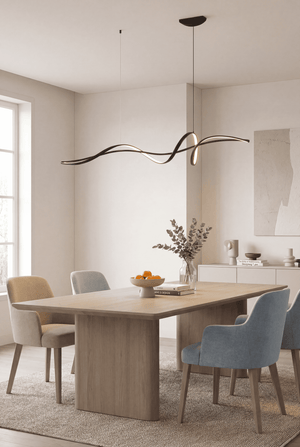
Pendant lights above the mirror are an elegant alternative for spaces with a ceiling height above 2.60 m. A pendant installed at a minimum of 2.10 m from the floor and extending 30 to 40 cm in front of the mirror produces downward lighting of 800 to 1200 lumens that reflects and diffuses evenly. This technique is particularly suited to large mirrors over 150 cm wide in dressing rooms and primary bedrooms.
Indirect lighting from adjustable floor lamps offers maximum flexibility to modulate the light effect according to the time of day. A 150 cm floor lamp delivering 1500 to 2000 lumens with an adjustable diffusion angle allows you to precisely direct light towards the mirror to create varied atmospheres. This mobile solution is particularly useful in multifunctional spaces. Explore our range of premium floor lamps to personalise your lighting.
Strategic placement techniques
Positioning facing natural openings is the most effective technique for amplifying daylight. A 100 x 140 cm mirror placed on the wall opposite a 120 x 140 cm window captures and redistributes up to 85% of the natural luminous flux, creating a second, virtual daylight source that eliminates shadow areas. This layout reduces artificial lighting consumption by 30 to 40% during daytime hours.
Corner installation produces an exceptional multiplier effect by simultaneously reflecting two perpendicular walls. This configuration creates a three-dimensional depth of field that increases the perception of volume by 60 to 80%, particularly striking in square spaces of 9 to 16 m². Adding recessed LED lighting in the ceiling at a 40-degree angle towards the mirror amplifies this architectural effect.
The mirror corridor technique involves installing two mirrors facing each other to create an infinite gallery effect. This layout requires a minimum distance of 2.50 m between the two reflective surfaces and central lighting from a pendant at 2.10 m from the floor delivering 1000 to 1500 lumens. The result produces a theoretically infinite illusion of depth that radically transforms narrow corridors.
Optimising lighting by room
In the bathroom, the illuminated mirror requires a minimum IP44 protection rating for zone 2, guaranteeing resistance to water splashes. The integrated lighting should deliver between 400 and 500 lm/m² to ensure optimal visibility during grooming rituals. A colour temperature of 4000K offers the best compromise between natural colour rendering (CRI ≥ 90) and effective brightness for make-up application and shaving.
For the living room, pairing a large decorative mirror of 140 x 180 cm with indirect ambient lighting creates theatrical depth. Wall lights delivering 300 to 400 lumens each at a temperature of 2700K generate a warm atmosphere that is amplified in the reflection. Adding a dimmer allows the intensity to be adjusted between 150 and 400 lumens depending on the activity, from movie nights to entertaining guests. Browse our collection of prestigious chandeliers that enhance entertaining spaces.
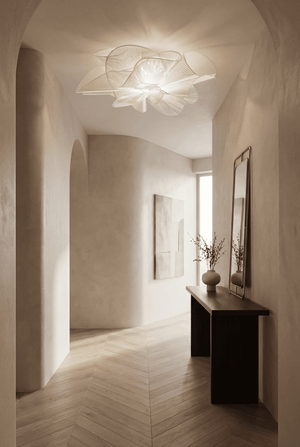
In the entryway, a minimum 70 x 120 cm mirror paired with a ceiling light of 1200 to 1500 lumens with a 120-degree diffusion angle creates a welcoming, luminous entrance. This configuration ensures functional lighting of 200 lm/m² while doubling the perception of volume in this often-cramped transitional space. Using a temperature of 3000K maintains a chromatic neutrality suited to any time of day.
LED technology and energy efficiency
Modern illuminated mirrors incorporate SMD LED strips (Surface Mounted Device) that deliver 80 to 120 lumens per watt, an luminous efficiency 8 to 10 times higher than traditional halogen technologies. This technical performance achieves 600 lumens of lighting for only 6 to 8 W of consumption, drastically reducing energy impact while maintaining premium light quality.
The lifespan of quality LEDs reaches 30,000 to 50,000 hours of use, equivalent to 10 to 15 years of daily use of 3 hours. This exceptional longevity eliminates replacement costs and guarantees colour stability over time, unlike conventional sources that drift by 15 to 20% after 5,000 hours. High-end models incorporate electronic drivers that maintain a constant flux even at end of life.
Smart features such as presence-detector dimming further optimise consumption by activating lighting only during actual use. Advanced systems also offer variable colour temperature between 2700K and 6500K, allowing the light tone to adapt to the circadian rhythm: warm light in the evening to promote relaxation, cool light in the morning to stimulate wakefulness.
Decorative styles and design trends
The minimalist style favours mirrors with discreet LED edges of 5 to 10 mm thick that create a floating halo of light. This clean aesthetic pairs perfectly with geometric wall lights in a matte black or brushed brass finish delivering directional lighting of 350 to 450 lumens. The result creates a sophisticated contemporary ambience where light structures the space without visually overloading it.
The industrial approach combines metal-framed mirrors in black or raw steel with exposed Edison-style fixtures. Wire pendants with LED filament bulbs of 600 to 800 lumens at 2200K create a warm vintage atmosphere amplified by the metallic reflections. This pairing works particularly well in spaces of 15 to 25 m² with ceiling heights of at least 2.80 m. Discover our designer pendant lights to compose your ambience.
The reinvented Art Deco style relies on mirrors with gold backlighting and brass or bronze fixtures with crystals. This composition produces multiple, especially spectacular plays of reflection in the evening, creating luxurious depth. Dimmable lighting between 100 and 600 lumens allows the dramatic intensity to be modulated according to the occasion, from intimate everyday moments to festive entertaining.
Installation and technical considerations
Wall-mounting an illuminated mirror of more than 15 kg requires anchors suited to the wall type: M6 Molly anchors for plasterboard with a 25 kg load capacity, chemical anchors for solid walls supporting up to 80 kg. The minimum distance between fixings should respect 60% of the total width to ensure balanced weight distribution and prevent long-term warping.
The electrical connection of LED mirrors requires a 220V supply transformed to 12V or 24V via an integrated driver. The recommended cable cross-section is 1.5 mm² for power outputs up to 30W over distances under 10 m. In bathrooms, compliance with electrical safety zones requires a minimum IP44 protection rating for zone 2 (60 cm around water points) and IP65 for zones 0 and 1.
Maintaining illuminated mirrors is limited to monthly cleaning with a microfibre cloth and an ammonia-free specialist spray to preserve the anti-fog treatment and watertight seals. As LEDs are solid components without filaments, no maintenance is required throughout their lifespan. Only replacing the electronic driver after 40,000 hours may be necessary on entry-level models.
Common mistakes to avoid
Oversizing the mirror relative to the available space creates a counterproductive, overwhelming effect. In a room under 10 m², a mirror should not exceed 100 x 120 cm to maintain a harmonious visual balance. Beyond this proportion, the reflection becomes dominant and creates a paradoxical feeling of confinement rather than spatial openness.
Installing facing a window without adequate sun protection exposes the mirror to temperatures above 50°C that degrade the LEDs and warp the frames. A UV protective film or blinds reducing direct exposure by 60 to 70% preserve technical integrity while maintaining the light multiplication effect. This precaution is particularly critical for south- and west-facing orientations.
Choosing an unsuitable colour temperature compromises the overall decorative harmony. A mirror with 6500K LEDs in a living room fitted with 2700K table lamps creates an unpleasant chromatic contrast of 3800K that is visually tiring. Consistency across all light sources with a maximum variation of 500K guarantees a homogeneous, comfortable atmosphere.
Budget and value for money
An entry-level illuminated mirror of 60 x 80 cm is priced between 120 and 200 euros, with basic CRI 80 LEDs and a 25,000-hour lifespan. These models are suited to occasional use but have limitations in colour rendering and features. The absence of a dimmer and the fixed colour temperature restrict their decorative versatility.
The premium segment, between 400 and 800 euros for 100 x 140 cm formats, offers CRI ≥ 90 LEDs, smart features (motion sensor, Bluetooth, touch dimming) and a 5-year warranty. These models incorporate anti-fog systems and high-end finishes that justify the investment through their durability and consistent light performance over 50,000 hours.
Pairing with complementary fixtures represents an additional budget of 300 to 600 euros to create a complete, optimised lighting system. This amount covers two premium wall lights (150-200 euros each) and possibly an accent pendant or floor lamp. The overall investment permanently transforms the space with an immediate aesthetic return on investment and an estimated property value increase of 3-5%. Visit our collection of designer ceiling lights to complete your installation.
Frequently asked questions
What lighting power is needed for a 120 cm wide mirror?
For a 120 cm wide mirror, choose integrated lighting of 20 to 30W delivering 1800 to 2400 lumens in total, or approximately 15 to 20 lumens per linear centimetre. This power ensures functional lighting of 400 to 500 lm/m² within an 80 cm radius in front of the mirror, ideal for grooming rituals. Complement it with two side wall lights of 400 to 600 lumens each for facial lighting without cast shadows.
At what height should an illuminated mirror be installed in a bathroom?
The centre of the mirror should be 160 to 170 cm from the floor to match average eye height. For an 80 cm tall mirror, the bottom edge would therefore be positioned at 120-130 cm and the top edge at 200-210 cm. In a family setting with users of varying heights, positioning at 165 cm offers the best compromise. Leave a minimum gap of 10 cm between the bottom edge and the vanity top for easy cleaning.
Can an illuminated mirror replace a room's main lighting?
A large illuminated mirror delivering 2000 to 3000 lumens can serve as the main lighting for a room of 8 to 12 m², generating 150 to 200 lm/m² through combined direct and reflected effect. However, for spaces larger than 12 m² or requiring precision lighting, it's advisable to supplement with a ceiling light of 1500 to 2000 lumens or distributed wall lights. This hybrid configuration ensures both general lighting and optimal accent lighting.
How can you prevent fogging on a bathroom's illuminated mirror?
Premium mirrors incorporate an anti-fog system using a heating resistor that keeps the surface 3-5°C above room temperature, preventing condensation. This function consumes 15 to 25W and activates automatically or manually depending on the model. For standard mirrors, effective ventilation with mechanical extraction providing 6 to 8 air changes per hour and a bathroom temperature maintained between 20 and 22°C naturally limit fog formation.