
Enhancing Your Walls with Wall Lights: Techniques and Decorating Inspiration
Your walls represent the most important surfaces in your home. Enhancing a wall with wall lights is not simply about installing a fixture: this approach requires a precise understanding of lighting techniques and a rigorous selection based on the texture, colour and function of each surface. A well-positioned wall light reveals relief, amplifies volumes and creates a sophisticated, personalised atmosphere.
The decorative wall light is an essential lighting tool for radically transforming the perception of a space. It allows you to direct the eye, structure zones and stage your interior decor with professional precision.
Understanding wall lighting techniques to enhance your surfaces
Decorative wall lighting is based on precise technical principles that determine the visual effect achieved. The wall washing technique involves illuminating a wall evenly from top or bottom to create a homogeneous luminous surface. This method requires wall lights with a minimum diffusion angle of 120 degrees and a power of 250 to 300 lm/m² for optimal results.
Grazing light works differently: the fixture is positioned very close to the wall to reveal textures and relief. This technique is particularly suited to stone, brick or raw concrete surfaces. A diffusion angle of 30 to 60 degrees produces pronounced shadows that visually sculpt your wall.
Colour temperature considerably influences the perception of materials. A warm white between 2700K and 3000K enhances natural tones such as wood, terracotta or beige shades. Conversely, a neutral white around 4000K suits walls painted grey, blue or pure white, preserving their chromatic freshness.
Colour rendering index is a decisive criterion for decorative enhancement. A CRI above 90 guarantees faithful rendition of nuances, essential when displaying artwork or wall textiles. Premium quality LEDs now reach CRI 95 to 98, rivalling natural light.
Choosing the right wall light model for your wall configuration
Upward-flow wall lights project light towards the ceiling, creating soft, enveloping indirect lighting. This configuration suits rooms with ceilings of at least 2.40 m and walls you wish to illuminate without glare. The light beam reflects off the ceiling and diffuses homogeneous light across the whole height of the wall.
Downward-flow wall lights concentrate light towards the floor and the lower part of the wall. They produce a dramatic, graphic effect particularly suited to hallways, stairwells or accent walls. Install them at a height of 1.80 m to 2 m for optimal visual balance.
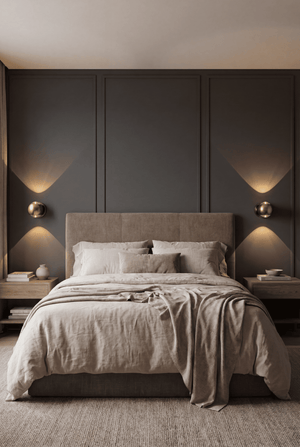
Dual-flow models combine upward and downward lighting. They create symmetrical luminous halos that visually structure the space and are perfectly suited to long walls where you wish to install several wall lights in a rhythmic pattern. This solution requires LED bulbs totalling at least 800 to 1000 lumens for a significant decorative impact.
Adjustable wall lights offer the flexibility needed to precisely adjust the lighting angle. Favour this option for textured walls, paintings or architectural features you wish to highlight with accent lighting. A GU10 base with a 6W LED generally provides adequate power for this type of application.
Our wall light collection features models suited to every lighting technique and all architectural configurations.
Determining the ideal height and spacing for maximum decorative effect
Installation height is the most critical parameter for enhancing a wall with wall lights. In a living room or bedroom, position your wall lights between 1.70 m and 1.80 m from the floor. This height corresponds to eye level and creates natural visual harmony with other decorative elements.
For a hallway, install wall lights slightly higher, between 1.80 m and 2 m, to avoid any risk of collision and maintain functional, decorative lighting. On staircases, maintain a regular vertical spacing of 1.20 m to 1.50 m between each wall light to ensure continuous, safe lighting.
Horizontal spacing between several wall lights depends on their light output and diffusion angle. For wall lights of 500 to 800 lumens with a 60-degree angle, maintain a distance of 1.50 m to 2 m. With more powerful models of 1000 lumens or more, increase spacing to 2.50 m to 3 m.
Symmetry strengthens the decorative impact: install wall lights on either side of a central feature such as a fireplace, mirror or headboard. Maintain an identical distance from the centre, generally between 60 cm and 80 cm, to create perfect visual balance.
Adapting light output and intensity to decorative use
An accent wall requires a concentrated power of between 300 and 400 lm/m² to stand out clearly from the rest of the space. This high intensity immediately draws the eye and transforms your wall into an architectural focal point. Use wall lights with a dimmer to precisely adjust intensity according to the time of day.
For soft ambient lighting, reduce power to 100 to 150 lm/m². This configuration suits bedrooms, relaxation spaces or walls you wish to illuminate subtly without creating too pronounced a contrast. Dimmable LED bulbs of 4W to 6W are generally sufficient.
Gallery walls displaying paintings or photographs require a minimum CRI of 90 and a colour temperature suited to the artworks. For contemporary art, favour a neutral white of 4000K. For classic paintings or reproductions, opt for a warm white of 3000K that enhances golden tones and patinas.
Compatibility with an electronic dimmer allows you to modulate the atmosphere according to occasion. Check that your LED bulbs are marked dimmable and choose a trailing-edge dimmer compatible with LED technology. This solution avoids flickering and extends lifespan up to 50,000 hours.
Making the most of wall materials and textures to create unique lighting effects
A natural stone wall reveals its full richness with lateral grazing light. Position wall lights 10-15 cm from the wall to create deep shadows that sculpt every relief and accentuate its raw character. A temperature of 2700K warms the greys and beiges typical of stone.
Textured walls in rendering, polished concrete or decorative plaster gain depth with the grazing technique. This approach involves placing the wall light very close to the surface so light glances across it tangentially. The result produces a dynamic play of shadows that transforms an ordinary surface into a remarkable architectural feature.
Wallpaper with geometric or floral patterns requires homogeneous lighting without pronounced shadows. Favour the wall washing technique with wall lights fitted with opaque diffusers that distribute light evenly. A minimum CRI of 90 preserves the vividness of printed colours.
Reflective surfaces such as mirrors, glass or lacquered panels require special attention to avoid glare. Install wall lights with diffusers angled perpendicular to the wall or use indirect-flow models that illuminate without creating unwanted reflections.
To complete your lighting scheme, also explore our selection of designer floor lamps that create elegant contrasts with your wall lights.
Integrating wall lights into an overall lighting strategy
Decorative wall lighting works in synergy with general and functional lighting. In a living room, combine wall lights with a central pendant and table lamps to create several complementary lighting layers. Wall lights provide ambient lighting at eye level while other sources cover functional needs.
The three-light-source rule recommends layering direct, indirect and accent lighting in each room. Wall lights mainly play the role of indirect and accent lighting, creating a layered, sophisticated atmosphere. This approach allows you to adapt the mood according to activities by selectively switching on each type of source.
In a bedroom, install wall lights on each side of the headboard for comfortable reading light of 300 to 400 lumens per wall light. Complement this with a dimmable ceiling light for general lighting and a bedside lamp for an additional source. This configuration offers total flexibility depending on the moment.
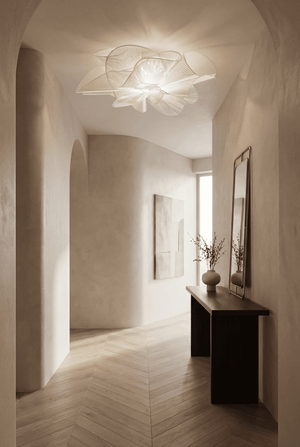
Hallways benefit from lighting rhythmically arranged with regularly spaced wall lights. Pair them with a motion sensor for automatic, economical operation. LEDs of 8W to 10W per wall light guarantee sufficient illumination of 150 lm/m² while creating an elegant decorative sequence.
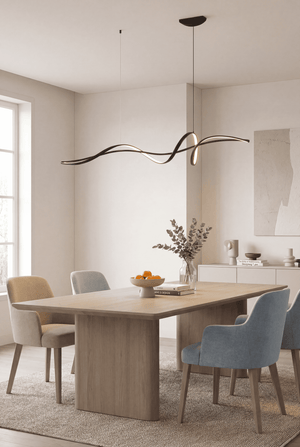
Discover how to harmonise your different light sources with our range of pendant lights that aesthetically complement your wall lights.
Selecting the wall light style according to the desired decorative atmosphere
Minimalist wall lights with clean lines and matte finishes suit contemporary and Scandinavian interiors. Favour models in white, black or anthracite grey aluminium with simple geometric shapes. These wall lights create graphic lighting effects without visually overloading your walls.
For an industrial style, choose wall lights in raw metal, aged brass or steel with articulated shades. These models add a utilitarian, authentic dimension while projecting directional light ideal for enhancing brick or concrete walls. An E27 base allows the use of LED filament bulbs to reinforce the vintage aesthetic.
Classic or Art Deco interiors are enriched with wall lights in polished brass, crystal or opaline glass. These noble materials diffuse a soft, flattering light that enhances panelling, mouldings and traditional wallpaper. Look for models with curved arms and sculpted details for maximum decorative effect.
Organic wall lights with fluid shapes and natural materials such as wood, rattan or linen create a warm, bohemian atmosphere. Their openwork structures project textured light patterns onto walls. These models are particularly suited to bedrooms and relaxation spaces.
Mastering the technical constraints for a successful installation
Electrical installation of a wall light requires a standard-compliant recessed box positioned at the intended height. If your wall has no electrical supply, consider models with an integrated switch and visible cable that you can conceal in a decorative trunking. This solution avoids costly chasing work.
The wall's load-bearing capacity determines the type of fixing required. For a standard plasterboard wall, use Molly or metal anchors supporting at least 20 kg. On a solid concrete or brick wall, hammer-in or chemical anchors guarantee a durable fixing. Always check the weight of the wall light before choosing your fixing system.
Compliance with electrical safety standards is mandatory. In damp rooms such as bathrooms, install only wall lights with a minimum IP44 protection rating in zone 2, located more than 60 cm from any water source. Wall lights in zone 1 require an IP65 rating.
Connected wall lights offer smart control via smartphone or voice assistant. This technology allows you to program lighting scenarios, adjust intensity and even change the colour temperature on certain models. Ensure compatibility with your existing smart home ecosystem before purchasing.
Complete your lighting project with our elegant ceiling lights for an overall approach to illuminating your spaces.
Optimising energy consumption and durability
LED bulbs are the mandatory choice for your wall lights. With a consumption of 4W to 10W depending on the desired light output, they reduce your energy costs by 80 to 90% compared to halogen bulbs. Their lifespan of 25,000 to 50,000 hours guarantees use without replacement for 15 to 25 years of standard use.
Favour LEDs with SMD or COB technology for optimal light quality. COB chips produce more homogeneous, powerful lighting with fewer visible light points. SMD LEDs offer better heat dissipation and suit compact wall lights without significant ventilation.
Electronic dimmers allow you to reduce consumption by up to 70% by adjusting intensity to your needs. A wall light used at 50% of its power consumes roughly half as much while significantly extending LED lifespan. Invest in quality LED-compatible dimmers to avoid flickering and malfunctions.
Motion sensors paired with your wall lights optimise use in passageways such as hallways and entrances. Set the timer between 1 and 3 minutes depending on foot traffic frequency. This automation can reduce electricity consumption by 30 to 50% in these areas.
Avoiding common mistakes when enhancing walls
A common mistake is installing wall lights that are too powerful, creating unpleasant glare and harsh shadows. Follow the rule of a maximum 300 lm/m² for accent walls and split this power between several light points rather than concentrating it on a single source.
Neglecting colour temperature produces inconsistent, cold atmospheres. Systematically harmonise all your light sources in the same room by choosing an identical temperature. For living spaces, favour a homogeneous warm white of 2700K to 3000K.
Installing wall lights without considering furniture height creates visual and functional conflicts. Precisely measure the height of your bookcases, consoles and paintings before determining the final position. Always leave a minimum gap of 15 to 20 cm between the fixture and any obstacle.
Choosing wall lights solely for their aesthetics without considering their technical performance and diffusion angle leads to disappointing results. Systematically check the specifications: luminous flux in lumens, CRI, colour temperature and lighting angle before any purchase.
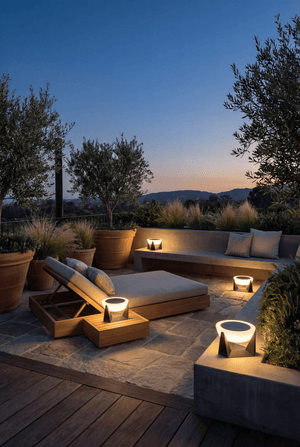
For outdoor lighting consistent with your interior design, see our outdoor lighting collection that extends your style to your facades.
Frequently asked questions about enhancing walls with wall lights
What wall light power should I choose for a 15 m² wall in a living room?
To enhance a 15 m² wall, calculate 150 to 200 lm/m² depending on the desired effect. You will need 2250 to 3000 lumens in total. Spread this power across 3 to 4 wall lights of 800 to 1000 lumens each, spaced 1.50 m to 2 m apart, for homogeneous, decorative lighting.
At what height should wall lights be installed on either side of a bathroom mirror?
Install the wall lights at 1.60 m to 1.70 m from the floor for optimal facial lighting without cast shadows. Space them 80 cm to 1 m from each side of the mirror. Choose models with a minimum IP44 protection rating and a CRI above 90 for faithful colour rendering.
How do I calculate the number of wall lights needed for an 8-metre hallway?
For an 8 m hallway with a standard width of 1.20 m, plan for 4 to 5 wall lights spaced 1.80 m to 2 m apart. With wall lights of 500 to 600 lumens each, you will achieve illumination of 150 to 180 lm/m², sufficient for comfortable passage and effective decorative enhancement.
What colour temperature should I favour to enhance an exposed brick wall?
An exposed brick wall is best enhanced with a 2700K to 3000K warm white temperature. This tone warms the natural reds and oranges of the brick. Use grazing light with an angle of 30 to 45 degrees to reveal the texture and create shadows that accentuate the relief of each brick.